|
Fusion genes, formed when two separate normal genes fuse together, were once thought to be largely confined to specific types of cancer. However, recent large scale human and cancer genome sequencing projects have proved otherwise, where these genes are identified in a worryingly vast range of malignant tumours, from glandular cancer to prostate cancer as well as in seemingly benign locations.
A fusion between two genomic regions on its own may pose no danger. The trouble arises if, or when, the fusion occurs across two genes resulting in a novel functional protein. Determining whether a fusion gene actually produces a full length functional protein is critical for predicting potential tumour initiation and growth, and one that could be crucial for targetting and treating cancer cells. However, verifying the predicted behaviour of the fusion gene is a tedious task, involving several weeks' worth of laboratory-based cloning and gene expression studies.
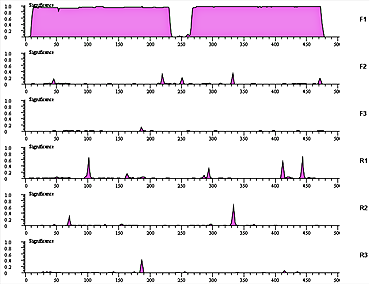
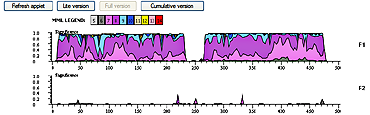
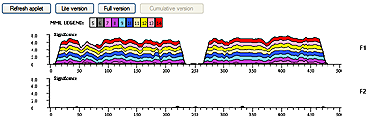
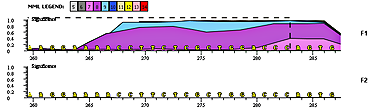
A novel and fast approach is to use pattern probabilities in SynaTate. Using this online application, it is possible to easily predict both the reading frame and the probability of a new fusion gene being expressed in its entirety. In addition, the putative breakpoint/fusion point can also be easily identified. Learn more about how SynaTate works.Using SynaTate to Predict Functional Motifs in the Philadelphia Chromosome
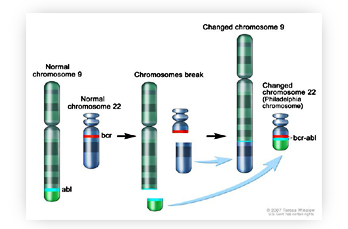
An example of a fusion gene is the BCR-ABL gene, the singular driver behind chronic myelogenous leukaemia (CML). CML affects 1-2 in 10 000 people, and occurs in all groups. Found in close to 95% of patients with CML, this fusion gene is formed when the ABL gene from chromosome 9 fuses to the BCR gene on chromosome 22. The altered chromosome 22, with the fusion gene on it, is called the Philadelphia chromosome.
|




 .
.